Varen er på fjernlager, leveringstiden er 4-6 hverdager. Mere info
Leveringsalternativer - Velges i kassen
Instabox - Velg din nærmeste pakkeboks
Gratis frakt
Bring – Leveres til pakkeboks nær deg
Gratis frakt
Bring – Leveres på hentested nær deg
Gratis frakt
PorterBuddy - Fleksibel hjemlevering - levert på døren på kvelden
174,00
Bring - Fleksibel hjemlevering - Levering til døren (om kvelden i større byer)
199,00
Vis alle leveringsalternativer (5)
Fraktprisen er basert på levering til dette postnummer:0015 - OSLO Skift postnummer
Oppgi postnummer for levering. Lagre
NOK
11.374,00
eksklusiv MVA 9.099,20
Totalt inkl. frakt
11.374,00
Denne funksjonen krever at man er logget inn. Opprett en bruker og liste systemet for å holde styr på fremtidige kjøp eller ønskelister. Opprett bruker Login
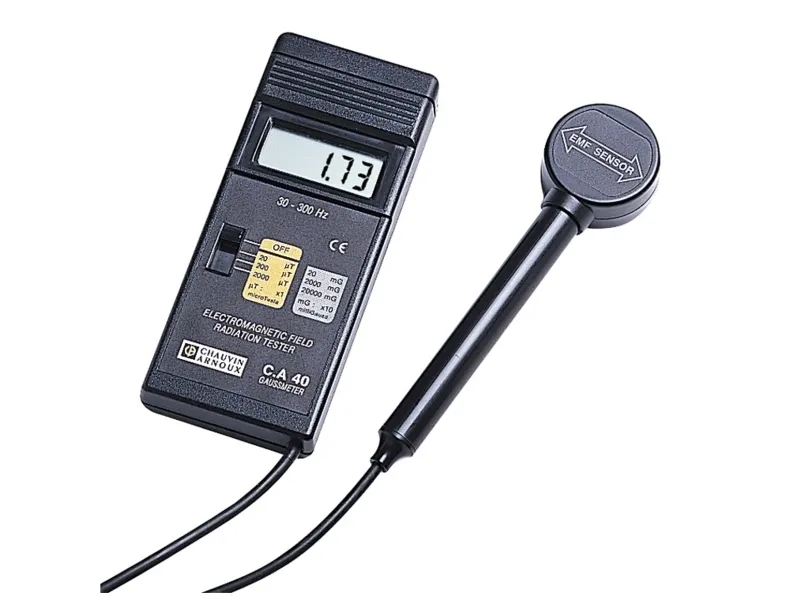
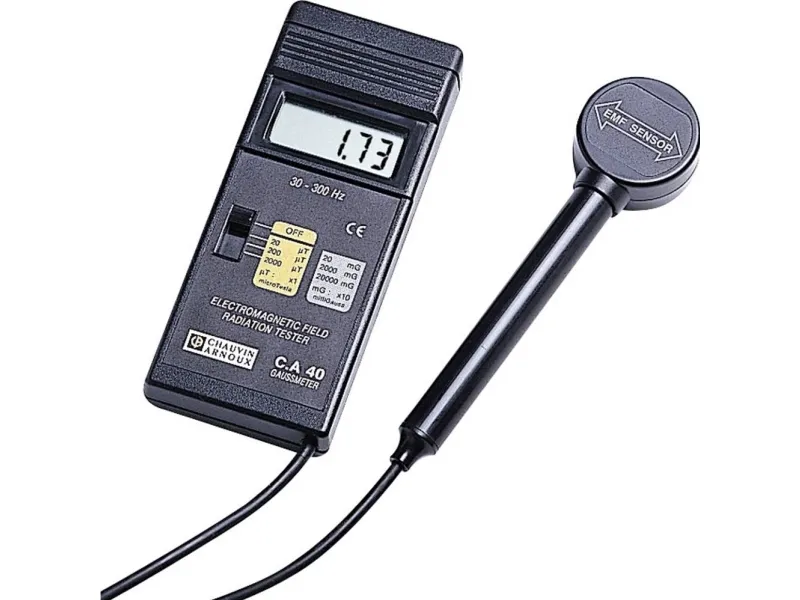
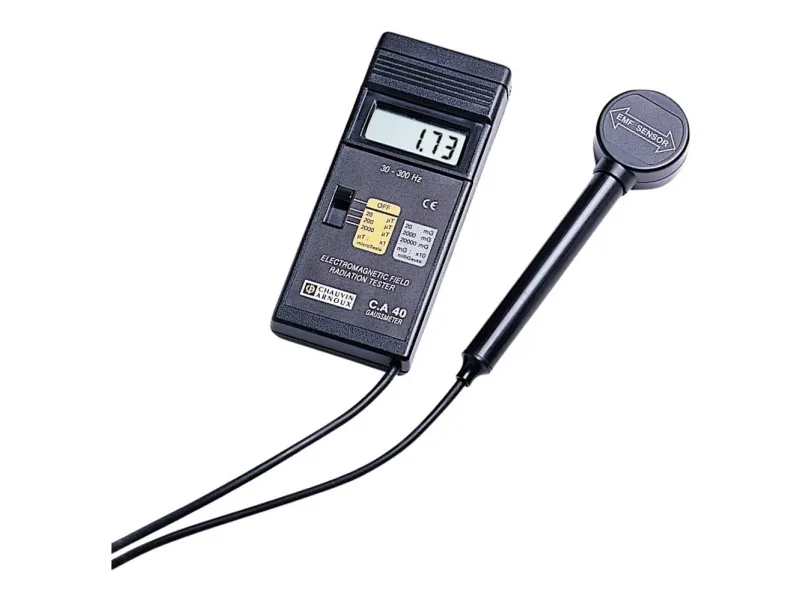
Chauvin Arnoux CA40 Gauss Meter Designed to measure the electromagnetic radiation levels the CA40 is designed for use on electrical current lines, home appliances and industrial equipment. As a high-performance portable device, the design and calibration allow measurement of radiation on a base of 50//60 Hz. The probe is separated from the box for ease of use, making it user friendly and assisting with measurements in hard to reach areas. Delivered in a hard case with 1 probe, a battery and user manual. (5 language user manual) Dimensions: 163 X 68 X 24 mm Features and Benefits: Battery operated 30 to 300 Hz Low-frequency magnetic fields measurement Easy to handle unidirectional probe 285g weight How Does a Gauss Meter Work? Gaussmeters are a Hall probe, a test current is sent by the meter through the probe. This Hall affect produces a voltage and the meter then records this. Often the highest voltage detected is used or frozen by the meter as voltage fluctuation is common given that magnetic fields are rarely static. Did you know? Carl Friederich Gauss born in 1777 developed one of the first devices that could measure direction and strength of a magnetic field. He was a pioneer in this type of study and a great mathematician. He created the system used to measure magnetism and is the reason the modern unit of flux density is named Gauss and why we call these units Gauss meters. Standards IEC 1010-2 and EN 50081-1
Produktet har følgende varenummer i vårt system:
EAN:
3760171413760
SKU:
P01167501
Hvorfor ser jeg at det samme produktet er tilgjengelig på forskjellige varenumre?
Produsenter lanserer ofte det samme produktet med forskjellige varenumre, vanligvis bare forskjellige versjoner av emballasjen. For eksempel kan emballasjen være rettet mot forskjellige land.
Vi gjør vårt beste for å forene produktene, men det kan skje at det samme produktet vises på forskjellige varenumre i systemet vårt.